
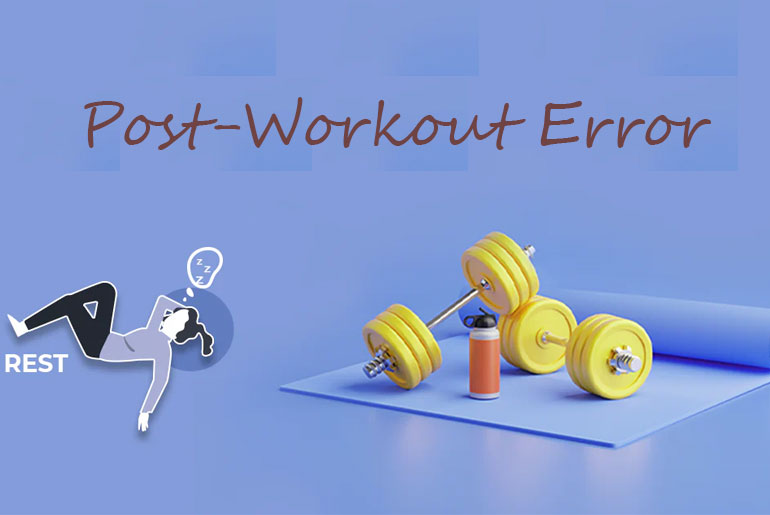
Even though you exercise frequently and perspire during each workout, you may still feel stuck, puffy, or weary all the time for reasons unrelated to what you’re doing in the gym. Most people are unaware of how much your post-workout routine affects hormones, strength, recuperation, and observable outcomes. Your hard work can be subtly undone by seemingly insignificant behaviors, such as skipping meals, getting inadequate sleep, and not managing your stress.
Most women believe that their exercise is the primary factor influencing their results. But really? Your hormones, strength, vitality, and recuperation all depend on what you do after working out. These are the cunning behaviors that, even when you’re regularly training, keep you feeling bloated, exhausted, under-recovered, and “stuck.”
Not eating after a workout
Your body requires the proper food to repair and rebuild itself after an exercise, so skipping your post-workout meal can impede healing and increase your appetite and cravings in the future. “Your body is begging for protein and carbs after training.” Ignoring that window will result in little improvement in strength or composition, a delayed recovery, and later cravings.
Putting off eating because you’re not feeling hungry
After working out, eating is crucial for muscle regeneration and recuperation, and depriving your body of food for extended periods of time puts undue stress on your body. Waiting hours to eat because you’re “not hungry yet” causes cortisol levels to rise and keeps you in stress mode for longer than your body can tolerate.
Rehydrating in the absence of electrolytes
While being hydrated is key, electrolyte replenishment is just as important as fluid consumption because you lose many electrolytes through perspiration when working out. “You’re just diluting your minerals and wondering why you still feel drained without sodium, potassium, and magnesium,” the dietician explains.
Caffeine consumption in place of food
Coffee just raises cortisol levels and keeps your body in a fight-or-flight state when used as fuel instead of actual food. “Coffee isn’t a recovery plan.” When your body needs nourishment, caffeine only raises stress hormones. Instead, pair it with actual meals.
Not eating enough for the remainder of the day
If you’re serious about gaining muscle, improving performance, and maintaining consistency with your fitness goals, you must correctly fuel your body throughout the day. “A good post-gym meal won’t matter if the rest of your intake is inconsistent,” says the nutritionist. For the entire day, your muscles require fuel.
After exercising, spending the entire day sitting
If you work out and then sit for the remainder of the day, your training progress may stagnate. Recovery requires modest activity, not full immobility. “Your body stiffens, blood flow slows, and recovery tanks.” Even tiny movement nibbles are beneficial.
Not making sleep a priority
Your strength, endurance, and general training progress will undoubtedly decrease if you don’t get enough sleep, which is essential for muscle recovery. “Your hardest session means nothing if you’re getting five hours of broken sleep,” the nutritionist explains. Literally, adaptation occurs overnight.
Analyzing your workout too much rather than recovering
Progress can also be slowed by concentrating too much on your exercise regimen while ignoring rest. “You don’t always need to train harder—you need to recover smarter,” the dietitian says.
Disregarding stress
Increasing your training intensity while you’re already under stress just puts more strain on your body, raising cortisol levels and making recovery even more challenging. “burnout, poor muscle building, and hormone issues are the results of high stress plus high training.” Your nervous system is important.
Believing that the gym is the only place to make progress
It’s not enough to just show up to the gym if you want to achieve well-rounded fitness; you also need to focus on the other important elements that influence long-term development. Your diet, routine, recovery, and lifestyle determine whether the workout works.
Disclaimer:
The information contained in this article is for educational and informational purposes only and is not intended as a health advice. We would ask you to consult a qualified professional or medical expert to gain additional knowledge before you choose to consume any product or perform any exercise.