

The heart pumps blood through the body every day, sending oxygen and nourishment to important organs. But many folks don’t do enough to maintain their hearts’ health. Doctors say that one of the best ways to keep your heart healthy is to do regular exercise. Exercise makes blood flow better, makes the heart muscle stronger, lowers the risk of heart disease, and helps you live longer and healthier. Interestingly, studies have also shown that exercise has benefits that go beyond heart health and are essential for keeping the brain healthy.
Could you please let me know how much exercise is necessary?
Experts say that moving around often can greatly lower the risk of several long-term health problems. Many people think that cardiac activity is good for the heart, but physicians say it’s just as good for the brain. Researchers have found that getting regular exercise can lower the risk of Alzheimer’s disease and dementia by as much as 40%.
The positive news is that you don’t have to work out a lot to get these benefits. Studies show that walking about 10,000 steps a day is the best way to enhance your health, but you can start seeing results with as few as 4,000 steps a day. This means that even little changes to your everyday routine, like walking more, taking the stairs, or doing mild exercise, can have a big effect on your health.

The Strength of Short but Intense Workouts
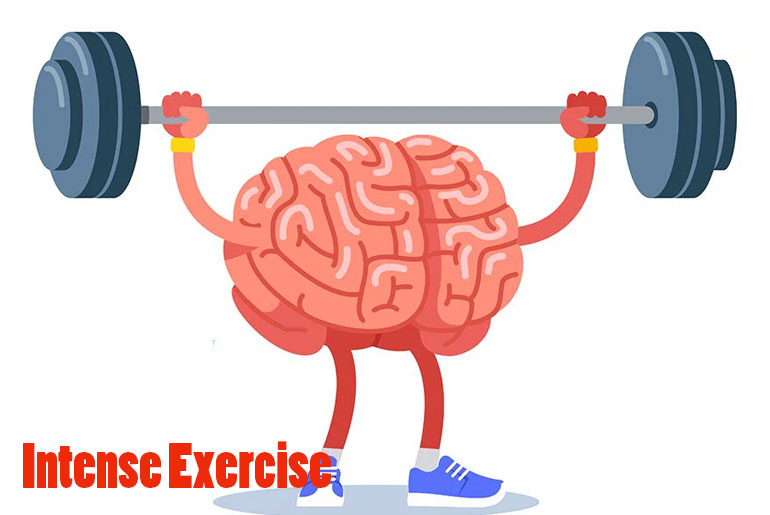
Short bursts of high-intensity exercise can also be very good for your health, in addition to moving around every day. Research indicates that engaging in 30 minutes of high-intensity exercise once weekly may reduce the risk of dementia and overall mortality by approximately 30 percent. This illustrates that those who are busy can still enhance their health by adding some tough workouts to their regimen from time to time.
How exercise keeps the brain safe
Exercise has an effect on several essential processes in the body that help keep the brain healthy. When you exercise, more blood flows to your brain, which brings more oxygen and nutrients that help brain cells work better. Exercise also makes blood vessels stronger, lowers inflammation in the body, and helps make a protein called Brain-Derived Neurotrophic Factor (BDNF).
BDNF is important for keeping neurones healthy, boosting memory, and even helping new brain cells grow. Because of these effects, people often say that regular exercise is a natural approach to keep the brain youthful and less likely to get worse with age.
In conclusion, One of the easiest and most effective ways to safeguard your heart and brain health is to work out regularly. Walking a few thousand steps a day, doing moderate exercise, or doing high-intensity workouts from time to time all help your heart, brain, and circulation. A lot of the time, experts say a simple rule: what is healthy for the heart is also excellent for the brain. People can take a vital step toward a healthier and longer life by making regular movement a priority.
Disclaimer:
The information contained in this article is for educational and informational purposes only and is not intended as a health advice. We would ask you to consult a qualified professional or medical expert to gain additional knowledge before you choose to consume any product or perform any exercise.