
Running is like a full-body audit, exposing every stiff ankle, tight hip, and inflexible spine you’ve been ignoring. It doesn’t only test your lungs and legs. Your joints must go through repeated ranges of motion with every step, and any restriction in mobility manifests as pain, discomfort, or inefficiency. Because of this, runners who disregard joint health and flexibility frequently experience aches and injuries. In addition to making running seem lighter and smoother, increasing mobility exercises and strength training also supports long-term performance, protects joints, and increases stride efficiency.
Power is increased by strength training, but without sufficient mobility, it may be restricted, ineffective, or even dangerous. You may lift more weight, move more fluidly, and lower your risk of injury by engaging in mobility exercises that enhance joint range of motion, muscle coordination, and movement quality. These exercises work particularly well when incorporated into a warm-up or recuperation regimen.
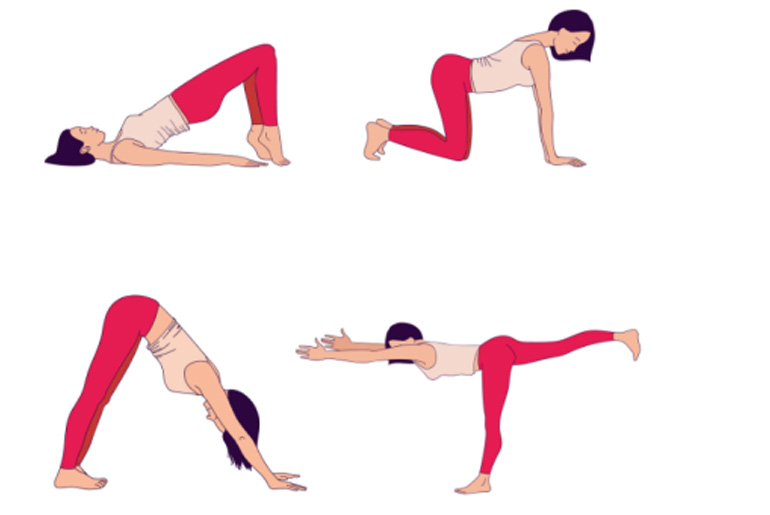
- Rock Backs with Quadruped: While keeping the spine neutral, quadruped rock backs are excellent for increasing hip mobility. You begin on all fours and, while maintaining a long spine, gradually rock your hips back toward your heels. Exercises like squats and deadlifts require appropriate hip hinging, which this action teaches. Additionally, by strengthening coordinated hip mobility, it lessens needless tension on the lower back.
- Heel Raises in Deficit: By letting the heel descend below floor level, deficit heel raises concentrate on ankle mobility and calf strength. This exercise increases Achilles tendon resilience and ankle dorsiflexion when done on a step or elevated surface. Increased ankle mobility results in more balanced lunges and heavier lower-body movements as well as deeper, more stable squats.
- Small Pronation Rocks with Split Stances: This exercise focuses on ankle and foot control, particularly pronation, or the foot’s innate capacity to roll inward. Allow the front foot to go through its natural range while rocking forward gently in a short split stance. This practice enhances foot stability, which is important for knee alignment and force transfer during strength workouts like squats and step-ups but is sometimes disregarded.
- Ankle Rocks for Standing: Standing ankle rockers are an easy yet effective technique that enhances ankle flexibility and joint awareness. Increase ankle dorsiflexion by moving your weight forward while maintaining heel grounding. During strength training, this mobility is essential for appropriate running mechanics, squat depth, and general lower-body stability.
- Rotations of Side-Lying Open Books: Increased thoracic spine mobility is necessary for upper-body strength exercises, and this exercise helps with that. While lying on your side with your legs bent, keep your lower body steady and rotate your upper arm open. During presses, rows, and overhead lifts, open book rotations improve posture, increase spinal rotation, and enable better shoulder placement.
- Reachable Kickstand Hip Hinge: The kickstand hip hinge challenges a conventional hinge movement’s balance and mobility. You extend forward and hinge at the hips, supporting yourself with one foot a little behind. This exercise increases hamstring mobility, glute activation, and single-leg hip stability—all essential for lunges, deadlifts, and other sports motions.
- Pelvic tilt combined with a hip flexor stretch: Tight hip flexors can put strain on the lower back and restrict hip extension. This stretch targets the hip flexor rather than the lumbar spine by emphasizing a posterior pelvic tilt. Increased hip flexor mobility supports stronger glute activation, improved running mechanics, and safer squatting and lunging patterns.
In conclusion, by including these mobility exercises in your regimen, you can improve the quality of your movements, maintain joint health, and get the most out of strength training. You may lift more weight and move more confidently, efficiently, and controllably in the gym and in everyday life by increasing your hip, ankle, spine, and foot mobility.

Disclaimer:
The information contained in this article is for educational and informational purposes only and is not intended as a health advice. We would ask you to consult a qualified professional or medical expert to gain additional knowledge before you choose to consume any product or perform any exercise.