
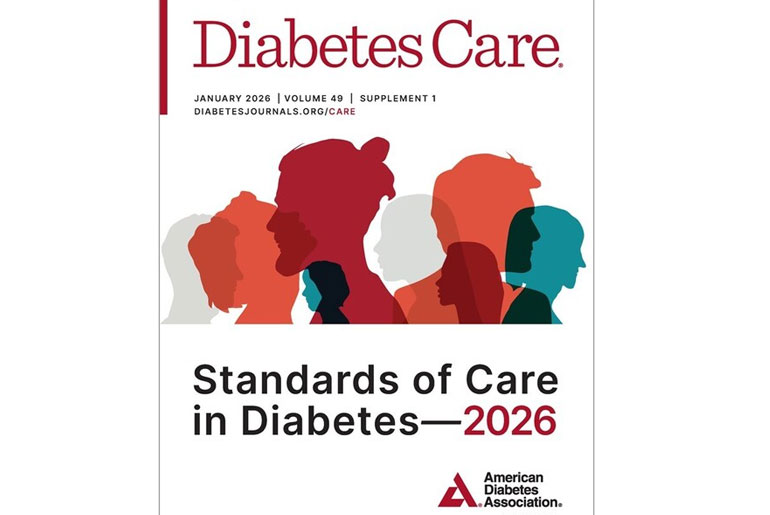
The “Standards of Care in Diabetes—2026” (Standards of Care), the gold standard in evidence-based recommendations for the diagnosis and treatment of diabetes and prediabetes, were published by the American Diabetes Association® (ADA). The Standards of Care, which are based on the most recent scientific research and clinical trials, include recommendations for improving health outcomes, strategies for preventing or delaying diabetes and its related comorbidities, such as obesity, and methods for diagnosing and treating diabetes in children, adolescents, and adults.
“The 2026 ‘Standards of Care in Diabetes’ represents significant advancement in the delivery of evidence-based, person-centered care. These guidelines synthesize the latest scientific research with practical clinical strategies, thereby equipping health care professionals with the tools necessary to provide optimal care for individuals living with diabetes,” stated Rita Kalyani, MD, MHS, the ADA’s chief scientific and medical officer.
Notable updates to the 2026 Standards of Care include:
Diabetes technology
- Recommended use of continuous glucose monitoring at diabetes onset and anytime thereafter to improve outcomes for anyone who could benefit from its use in diabetes management
- New guidance removing the need to meet certain treatment requirements before initiation of continuous subcutaneous insulin infusion or automated insulin delivery
Glucose-lowering medications
- New guidance on obesity pharmacotherapy dose individualization in people with diabetes
- New guidance on the treatment of obesity in people with type 1 diabetes
- New guidance on glucose-lowering therapies in people with chronic kidney disease, including use by those on dialysis
- Additional guidance on the use of glucose-lowering therapy beyond obesity and glycemic treatment, including heart, kidney, and liver health benefits
Nutrition
- Guidance on the eating patterns with evidence for preventing type 2 diabetes, including Mediterranean-style and low-carbohydrate eating patterns
- Emphasis on monitoring for adequate nutritional intake and expanded discussion on the importance of physical activity during obesity treatment
Diabetes management
- New guidance for glycemic management for individuals during cancer treatment and for those undergoing organ transplantation
- Updated blood pressure goals for individuals with high cardiovascular or kidney health risk and for older adults, with a tighter blood pressure goal for those at risk and a more relaxed goal for most older adults
- Expanded guidance on screening and monitoring individuals at risk for type 1 diabetes, including the utilization of diabetes technology
The ADA’s Professional Practice Committee (PPC) for Diabetes works to update its Standards of Care every year. Mandeep Bajaj, MBBS, FRCP, and Rozalina G. McCoy, MD, MS, co-chaired the PPC this year. Physicians, nurse practitioners, certified diabetic care and education specialists, registered dietitian nutritionists, pharmacists, and methodologists are among the global experts from various professional backgrounds that make up the PPC. The committee’s competence spans a variety of relevant disciplines. The 2026 Standards of Care have received the endorsement of the following organizations:
- American Society for Bone and Mineral Research (Bone Health, Section 4)
- The Obesity Society (Section 8)
- American College of Cardiology (Section 10)
- National Kidney Foundation (Section 11)
- American Geriatrics Society (Section 13)
- International Society for Pediatric and Adolescent Diabetes (Section 14)
Other noteworthy changes include:
- Guidance on behavioral health screening and referral for concerns such as diabetes distress and anxiety
- Information on supporting diabetes technology use for children, adolescents, and adults in educational and workplace settings
- New and updated algorithms on insulin therapy in type 1 diabetes, prevention and treatment of symptomatic heart failure, and chronic kidney disease treatment and atherosclerotic cardiovascular disease prevention in people with type 2 diabetes
- New discussion on emerging technologies in foot care and information on adjunctive advanced therapies for diabetic foot ulcers
- Updated guidance for older adults, including continuous glucose monitoring use, protein intake, and assessing geriatric syndromes and functional impairments
- Updated guidance for children and adolescents, including nutrition education and screening for psychosocial concerns and complications associated with type 1 and type 2 diabetes
- Updated information on preconception counseling and appropriate non-insulin glucose-lowering therapy discontinuation
- New hospital guidance, including glycemic goals in the perioperative period and expanded discussion on technology use
“The Standards of Care is a vital part of the ADA’s efforts to improve the lives of all people affected by diabetes. It offers the trusted support needed for people living with diabetes and those caring for them while we continue to push toward a cure,” stated Charles “Chuck” Henderson, the ADA’s chief executive officer.
The January 2026 edition of Diabetes Care® now includes the 2026 Standards of Care as an online supplement. Additionally, the most recent rules are available in an easy-to-use Standards of Care app for iOS and Android devices, complete with interactive tables and algorithms. The ADA’s professional website, DiabetesPro®, offers more tools, such as a thorough PowerPoint deck and a webcast that can earn CE credit.
Soon, a quick-reference pocket chart will be sold on ShopDiabetes.org. The ADA’s Primary Care Advisory Group created the Abridged Standards of Care, which will be published in Diabetes, Obesity, and Cardiometabolic CARE® in the spring of 2026 for primary care practitioners. The online edition, condensed guidelines, and all associated materials will be updated in real time throughout the year to reflect the most recent research and changes in regulations thanks to the “living” Standards of Care approach.
Disclaimer:
The information contained in this article is for educational and informational purposes only and is not intended as a health advice. We would ask you to consult a qualified professional or medical expert to gain additional knowledge before you choose to consume any product or perform any exercise.