
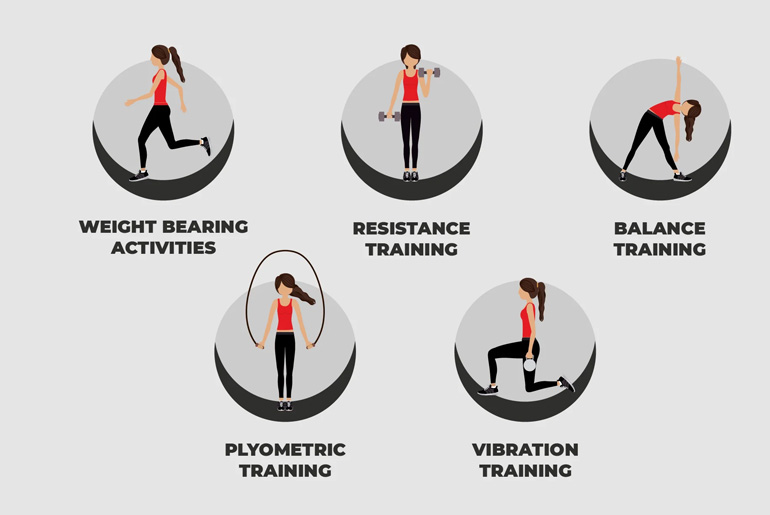
While bone health declines with age, the desire to travel and experience new places, people, emotions, and more never goes away. When your body hurts from even the smallest effort, how can you balance both and still achieve all of your goals? The key, then, is to move the body more and to consistently perform activities that build bone strength and improve movement endurance.
Kneeling Windmill
The Kneeling Windmill is a dynamic exercise that primarily targets the core, shoulders, and hips while improving spinal mobility. Starting from a kneeling position, you rotate your torso while reaching one hand toward the floor and the other overhead, mimicking a windmill motion. This exercise enhances rotational flexibility, strengthens the oblique muscles, and improves balance and coordination, making it an excellent movement for functional fitness and full-body activation.
Reverse Table Tap to L-Sit
This exercise combines a reverse tabletop position with an L-sit transition, engaging the core, triceps, shoulders, and hip flexors. From the reverse tabletop, you tap one hand to the opposite knee or the floor, then extend the legs forward into an L-sit. It develops upper body strength, core stability, and hip flexor mobility, while also challenging balance and body control. The combination of movements makes it highly effective for building dynamic strength.

Lateral Glide with Knee Tap
The Lateral Glide with Knee Tap is a functional lower body exercise that emphasizes core stability, hip strength, and glute activation. By sliding laterally on one leg or using a glide disc, then tapping the knee lightly to the floor, the exercise strengthens the lateral stabilizers and improves coordination and balance. It is particularly beneficial for enhancing side-to-side movement control, which is important for agility and injury prevention.
Kneeling to a Low Squat
This movement focuses on hip mobility, leg strength, and transitional control. Starting from a kneeling position, you shift back into a low squat, maintaining an upright torso and engaged core. It improves flexibility in the hips and ankles, strengthens the quads and glutes, and encourages smooth functional transitions between different postures. This exercise is excellent for improving overall lower body stability and movement fluidity.
Alternate Sitting and Rising
Alternate Sitting and Rising is a full-body functional exercise that targets the core, glutes, and legs while enhancing balance and coordination. Moving from a seated position on the floor to a standing or semi-standing posture and back, alternately leading with different limbs, mimics everyday movements like standing from a chair. It develops functional strength, improves body awareness, and promotes mobility in the hips and spine, making it highly practical for both fitness and daily activity.
Summary:
Together, these five exercises form a comprehensive routine that emphasizes core stability, lower and upper body strength, balance, mobility, and coordination. They are particularly effective for improving functional fitness, ensuring that the body moves efficiently and safely through everyday motions while building strength and flexibility.
Disclaimer:
The information contained in this article is for educational and informational purposes only and is not intended as a health advice. We would ask you to consult a qualified professional or medical expert to gain additional knowledge before you choose to consume any product or perform any exercise.