
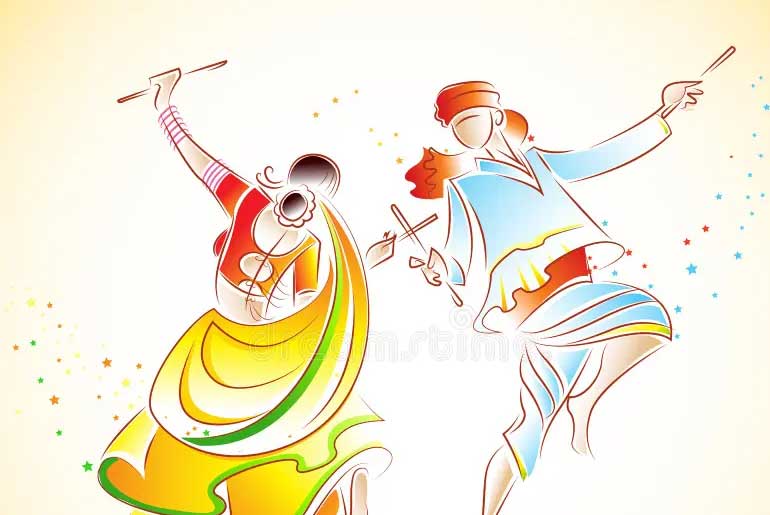
Every year, as people get together to celebrate with Garba and Dandiya Raas, cities come alive with song, color, and rhythm during Navratri. However, you might not be aware that you’re working out your entire body as you’re tapping sticks in time with the music or spinning in a circle. Yes, your Navratri dance moves do more than simply make you feel better; they also help you tone your muscles, burn calories, and strengthen your heart.
Cardio Without Feeling Like It
High-energy dances like garba and dandiya require constant movement, synchronized footwork, arm movements, spins, and squats. Your heart rate increases when you dance continuously for 30 to 60 minutes, just like it would when you jog, do Zumba, or do aerobics.

You can burn 250–600 calories each hour dancing, depending on your weight, level of intensity, and duration. That is comparable to working out at the gym, but far more enjoyable and culturally significant!
Engaging Every Muscle in the Body
These customary dances include:
- Exercise for the legs: frequent stepping, hopping, squatting, and spinning strengthens and extends the calves, quadriceps, and glutes.
- Core engagement: all of the twisting and turning enhances balance and tones the abs.
- Holding and swinging dandiya sticks, especially during quicker songs, tones the upper body by strengthening the arms, wrists, and shoulders.
- In addition to toning your muscles, the rhythmic, repetitive motions also help you become more flexible and coordinated.
Enhances Mental Health and Mood
Garba and Dandiya, like all rhythmic physical activities, aid in the release of endorphins, which are the body’s natural “feel-good” chemicals. Additionally, dancing with others, dressing colorfully, and listening to joyous music all help people feel less stressed, anxious, and more connected.
Because of this mind-body link, these dances are a fantastic way to improve mental health, particularly during stressful times or after long workdays.
Enhances Endurance and Strength
It’s not easy to dance Garba or Dandiya for multiple rounds, so don’t be fooled by the cheerful atmosphere. The constant motion improves lung capacity and strengthens your heart, which over time helps you gain endurance. It’s a sign that your fitness is getting better if you notice that by the third or fourth night of Navratri, you’re less exhausted and have more energy to dance for longer.
A Guide to Calorie Burning
The approximate number of calories you can burn when dancing during Navratri is as follows:
- Calories for Duration Burned (roughly)
- 150–300 calories in 30 minutes
- 300–600 calories in 60 minutes
- 500–900+ calories in 90 minutes
Ways to Optimize the Advantages of Fitness
- Water is essential for dancing since it causes perspiration.
- Put on cozy shoes: Supportive shoes might assist in avoiding knee and foot issues.
- Stretches are a great method to warm up and cool down before and after dancing.
- Move with purpose: To make each round into a mini-workout, move completely, swing your arms, and use your core.
Burn, Dance, Repeat
More than just a holiday, Navratri is a celebration that affects you both literally and figuratively. Therefore, remember that when you dance in your lehenga or kurta the next time, you’re not only continuing a tradition but also burning calories, gaining strength, and elevating your mood.
Disclaimer:
The information contained in this article is for educational and informational purposes only and is not intended as a health advice. We would ask you to consult a qualified professional or medical expert to gain additional knowledge before you choose to consume any product or perform any exercise.