

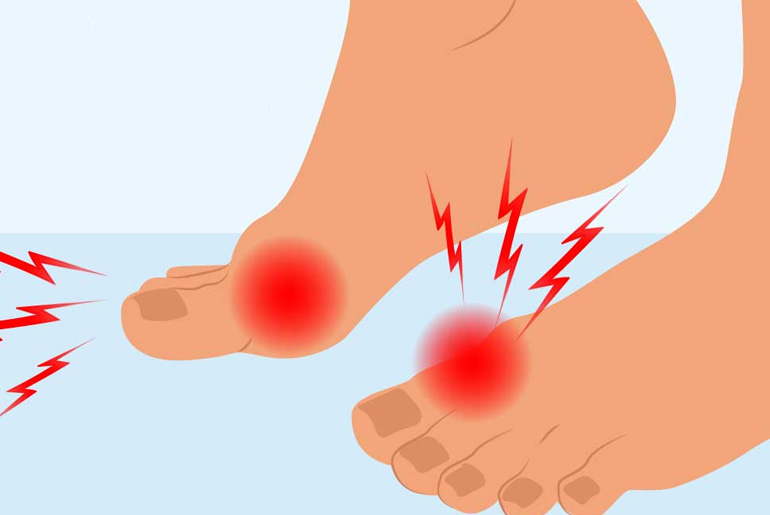
You’re resting soundly at night when you abruptly awaken to a burning agony in your foot, particularly in your toes. It feels far worse than the typical ache from standing or walking, and it is acute and searing.
This sudden agony at night may be the first indication to many that something is “wrong”—something deeper and more significant is happening within. And that could be the cause of the elevated uric acid levels.
For the uninitiated, elevated uric acid levels can subtly accumulate over time, creating microscopic crystals in joints. These crystals can cause that sudden, terrible foot pain when they flare up, which usually happens in the quiet hours of the night. Additionally, many people write off these episodes as random injuries, exhaustion, or just “foot strain” because they happen suddenly.
But according to scientists, these episodes could be early warning signals of gout, and ignoring them would only result in chronic issues, joint damage, or recurrent discomfort.
How can that be avoided? Let’s first examine the relationship between uric acid and foot pain, the differences between that intense sting and ordinary foot pain, and the importance of understanding these differences for long-term health.
When the foot is struck by uric acid at night
What is uric acid exactly? It is a naturally occurring waste product that our systems manufacture when they break down purines, which are substances that are present in a variety of foods and are even made by our cells. Now, uric acid typically dissolves in blood and is removed by the kidneys. However, an excess of uric acid starts to build up in the blood when our bodies manufacture too much of it as a result of the foods we eat or when the kidneys are unable to adequately eliminate it. Excess uric acid has the potential to crystallize and accumulate in joints over time, particularly in cooler, peripheral areas like the ankles, feet, or toes.
The piercing sting at night
Excess uric acid in the blood forms the sharp, needle-like crystals, which irritate the joint and set off the body’s immunological reaction. These abrupt swelling, inflammation, and excruciating pain consequently intensify. Gout, as it is commonly called, frequently does not develop gradually. Rather, it strikes suddenly, forcefully, and quickly.
The two primary factors that make the overnight hours particularly susceptible to foot pain are the lowered body temperature and the slowed blood flow. The excess uric acid is more difficult to dissolve when our bodies cool down as we sleep, which makes crystals more likely to develop. And what else? Since there is less movement in the body at night, dehydration is more likely to occur, which could further concentrate the uric acid and raise the likelihood of crystallization.
How normal foot pain differs from uric acid-induced foot discomfort
That being said, uric acid is not the source of all foot discomfort that occurs at night. Numerous conditions can cause foot pain, including arthritis, minor traumas, overuse, and muscular strains. However, there are a few clear indicators of uric acid discomfort associated with gout.
Abrupt and severe onset: Rather than being a persistent ache, gout pain typically manifests as a stinging sting that intensifies rapidly (sometimes within hours). The searing, stabbing, or throbbing sensation may be the result of uric acid-induced foot discomfort.
Joint-specific pain (big toe or foot joint): Gout usually affects the big toe, but it can also affect other foot joints, ankles, wrists, or knees. In contrast, general foot pain can affect muscles, arches, heels, and many other places.
Gout-affected joints might swell, turn red or discolored, feel hot to the touch, and become so sensitive that even a bedsheet lying lightly is intolerable.
Pain exacerbated by the smallest touch or movement: While other injuries can cause such sharp, severe pain, gout pain can be triggered by even minor touch or contact during a flare-up, not simply walking or pressure.
Gout pain often occurs at night or in the morning. Such discomfort is a major clue that this isn’t your typical muscle or “overuse” pain because of the drop in body temperature and dehydration that occurs while you sleep.
Regular foot pain, on the other hand, which might be brought on by overuse, exhaustion, cramping in the muscles, or soreness, normally develops gradually, may affect the muscles instead of the joints, and is typically not accompanied by swelling, redness, or severe sensitivity. Rather than producing abrupt, intense night agony, it might feel better with slumber or a light massage.
The sharp pain at night
The sharp, needle-like crystals that irritate the joint and trigger the body’s immune response are formed by an excess of uric acid in the blood. As a result, these sudden swelling, inflammation, and intense pain get worse. The condition known as gout often does not develop gradually. Instead, it strikes quickly, forcefully, and abruptly.
The dropped body temperature and the slowed blood flow are the two main reasons why foot discomfort is more common throughout the night. Crystals are more likely to form when our bodies cool as we sleep because the excess uric acid is harder to remove. What else? Dehydration is more likely to happen at night since the body moves less, which could further concentrate the uric acid and increase the chance of crystallization.
Disclaimer:
The information contained in this article is for educational and informational purposes only and is not intended as a health advice. We would ask you to consult a qualified professional or medical expert to gain additional knowledge before you choose to consume any product or perform any exercise.