
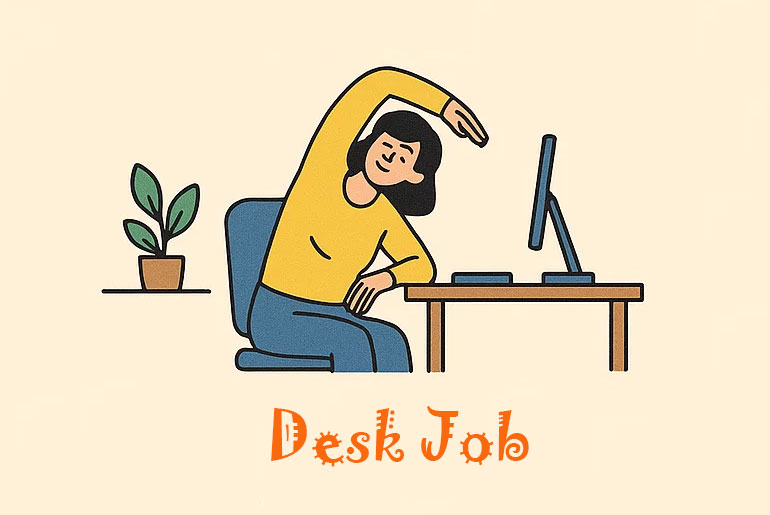
The sedentary nature of today’s urban lifestyle has a devastating effect on general health. People who enter the workforce are more susceptible to lifestyle diseases as they age because they are compelled to stay at their workstations for extended periods of time from an early age.
Long stretches of sitting can affect the body in the following ways:
- Stooped over the shoulder blades
- A crumpled chest
- Hip flexor tightness
- Gluteal weakness
For those who spend a lot of time sitting down, walking is one of the simplest and most efficient forms of exercise. Long periods of sitting diminish calorie expenditure, stiffen joints, and slow circulation. Frequent walks enhance blood flow, ease stiffness, and engage the hip and leg muscles. Even brief walks of five to ten minutes every hour can mitigate the negative effects of extended sitting. Additionally, walking enhances mood, promotes cardiovascular health, and aids in maintaining a healthy weight. Desk workers’ energy and health can improve greatly by getting up and walking around during the day.

Core Stability for a Healthy Spine: The McGill Big 3
A spine specialist created the McGill Big 3 exercises to preserve the lower back and develop the core. The bird dog, side plank, and modified curl-up are some of these exercises. When combined, they promote core stability without overstressing the spine. Long periods of sitting can cause weak core muscles, which can lead to bad posture and lower back pain. Regularly performing the McGill Big 3 helps maintain the stability and appropriate alignment of the spine by strengthening the back and abdominal muscles. For desk workers who frequently have lower back pain, this sequence of exercises is especially beneficial.
Hip Thrusts: Developing Your Glutes
The glute muscles can be strengthened and activated using hip thrusts. “Gluteal amnesia” is the term used to describe the weakening or inactivity of the glutes brought on by prolonged sitting. Poor posture, lower back discomfort, and diminished athletic performance can all result from weak glutes. Hip thrusts directly target the glutes, aiding in their regaining of strength and functionality. Additionally, this exercise enhances hip extension, which is necessary for running, walking, and lifting. Hip thrusts help desk workers improve their overall body mechanics and prevent the harmful effects of sitting by strengthening the posterior chain.
Dead Hangs: Relaxing the Spine
Dead hangs involve hanging from a pull-up bar with the arms extended and the body relaxed. This simple movement can be extremely beneficial for people who spend long hours seated or hunched over computers. Sitting compresses the spine and tightens the shoulders, but dead hangs help decompress the spinal column and stretch the upper body. They also strengthen the grip, shoulders, and forearms while improving shoulder mobility. Even hanging for 20 to 30 seconds at a time can relieve tension in the back and improve posture. For desk workers, dead hangs provide a powerful way to counteract the spinal compression caused by prolonged sitting.
Face Pulls: Improving Posture and Shoulder Health
Face pulls are an excellent exercise for strengthening the upper back and rear shoulder muscles. Many desk workers develop rounded shoulders and forward head posture due to constant computer use. Face pulls target the muscles responsible for pulling the shoulders back and maintaining good posture. By strengthening the rear deltoids, rhomboids, and upper back muscles, this exercise helps correct posture imbalances and reduce the risk of shoulder injuries. Performing face pulls regularly can also improve shoulder stability and support better alignment during daily activities.
The Dynamic Couch Stretch: Restoring Hip Flexibility
The dynamic couch stretch is a powerful movement designed to stretch the hip flexors and quadriceps. Sitting for long periods causes the hip flexor muscles to shorten and tighten, which can lead to lower back pain and limited hip mobility. The couch stretch helps open up the front of the hips and restore flexibility. When performed dynamically, the stretch also promotes better blood flow and mobility in the hip joints. This exercise is particularly helpful for desk workers who experience tight hips or discomfort after long hours of sitting.
A sedentary lifestyle associated with desk jobs can lead to several physical problems, including poor posture, muscle imbalances, and reduced mobility. However, incorporating a few key exercises into daily routines can greatly reduce these risks. Walking keeps the body active and improves circulation, the McGill Big 3 strengthens the core and protects the spine, hip thrusts reactivate the glutes, dead hangs decompress the spine, face pulls improve posture, and the dynamic couch stretch restores hip flexibility. Together, these exercises form a powerful routine that helps desk workers maintain strength, mobility, and overall physical health. By practising these movements regularly, individuals can counter the negative effects of prolonged sitting and build a healthier, more resilient body.
Disclaimer:
The information contained in this article is for educational and informational purposes only and is not intended as a health advice. We would ask you to consult a qualified professional or medical expert to gain additional knowledge before you choose to consume any product or perform any exercise.