
You can still get your acne to agree with your demands, but belly fat is much more obstinate and won’t go away. And even if it does, it reappears with no prior notice! Yes, we understand that it’s as inconvenient and frustrating as it gets. However, the health hazards it presents are more worrisome. The risk of numerous health issues is greatly increased by excess abdominal fat, especially visceral fat, or fat around the organs. These include metabolic diseases, heart disease, type 2 diabetes, and several types of cancer. These risks are exacerbated by belly obesity, which also contributes to hormonal imbalances and inflammation.
The good news is that belly fat can be lost with a little work, though not very easily.
Although crunches are frequently less effective and might cause lower back discomfort, many of us mistakenly believe that they are a sign of core strength. To tighten your core, contemporary fitness professionals advise using safer, more effective, and more intelligent exercises.
Want to learn more? Let’s explore ten revolutionary substitutes that will strengthen your entire core and reduce your tummy.
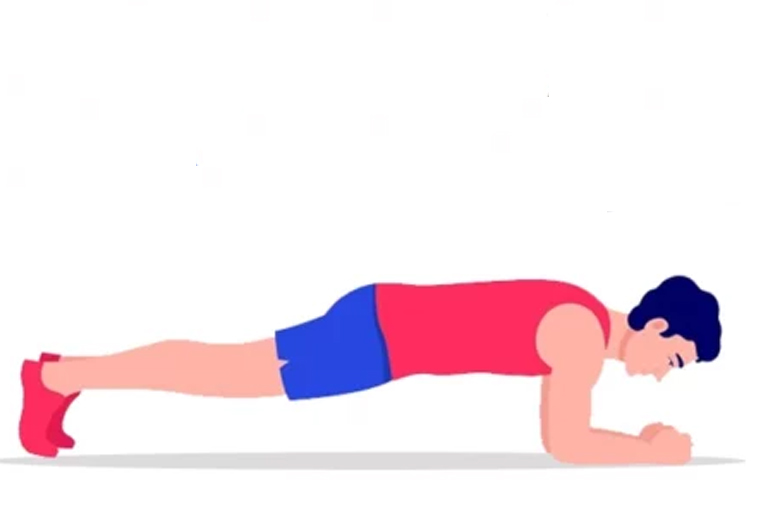
- Plank
The plank, a classic exercise, requires your core—your abs, back, hips, and stabilizers—to remain taut and connected. For core exercises, Harvard Health refers to it as the “gold standard” since it engages more muscles and places a lot less strain on the spine than crunches or sit-ups. Additionally, side planks can always be used to add flair. More effective than twisting crunches at sculpting the abdomen and protecting your lower spine, side planks target the obliques and create lateral stability.
- Raising the legs hanging
Hanging leg raises are a sophisticated bodyweight exercise in which you hang from a bar and raise your legs toward your torso in a straight or bent position. Lower your legs with deliberate motion and a small tilt of your pelvis while hanging from a bar. This gives your lower abs a strong, safe workout. In addition to the hip flexors and obliques, the main focus of this difficult exercise is the abdominal muscles, particularly the lower abs.
3. Dog-bird
An exercise that strengthens the core and improves stability, the bird dog is done on the hands and knees. It entails simultaneously extending the opposing leg and one arm while keeping the spine and core stable. Enhancing balance and coordination, this exercise works the muscles in the shoulders, glutes, lower back, and abdomen. With one arm and the other leg extended, you balance on your hands and knees. Body control and alignment are improved by strengthening deep core muscles like the multifidus and transverse abdominis.
4. Twists in Russian
A basic abdominal exercise that works the hips, shoulders, and core is the Russian twist. By twisting around the abdomen, it tones the core muscles and is usually done in repetitive sets. Lean back, elevate your feet, and rotate your torso from side to side. This dynamic exercise strengthens your rotator muscles and works your abdominal and obliques.
5. Climbers of mountains
Mountain climbers are a type of bodyweight exercise that works several muscle groups and works the heart by simulating the motion of climbing a mountain. In essence, it’s a moving plank in which you alternate between running with your knees brought to your chest. Drive your knees toward your chest alternately while in the plank posture. This is a high-tempo workout that strengthens your entire core and burns belly fat.
6. Woodchoppers with cables (Standing chops)
Standing chops, another name for cable woodchoppers, are a type of core exercise that tones the obliques and other thoracic muscles. They use the core to twist and drag the weight across the body while simulating the motion of cutting wood with a cable machine. Functional movement patterns, stability, and core strength are all enhanced by this workout. Swing a weight diagonally across your body to ace this one. This useful exercise trains your core to resist and regulate rotation while strengthening your obliques.
7. Lifting the hips (reverse crunches)
The lower abdominal muscles are the main focus of hip lifts, commonly referred to as reverse crunches. It entails maintaining the knees bent and pulling them in toward the chest while raising the hips and legs off the floor. This exercise enhances general core stability and lower core strength. Using just your abs, raise your hips off the floor and toward your chest. Control your descent; this is a great exercise for toning your lower abdominal.
8. Leg drop (little emphasis on the abs)
The leg drop exercise, which focuses on the lower abs, involves lying on your back, raising your legs toward the ceiling, and then lowering them gradually while maintaining an engaged core and a pushed lower back. The lower abdominal muscles are the main focus of this exercise, which also serves to strengthen and stabilize the core. Lower both legs slowly toward the floor while lying on your back, then raise them back up. It’s great for controlling the lower abdomen without compressing the spine like crunches do.
9. Core exercises while standing
Exercises known as “standing core moves” target and improve your core muscles while you are standing erect. Standing core exercises, as opposed to more conventional ones like crunches or planks, use bodyweight as resistance and frequently include motions that enhance functional strength, balance, and posture. These workouts can be a fantastic complement to any fitness regimen, particularly for novices or people who find floor exercises challenging. These upright exercises, which range from side bends to standing knee lifts, improve posture, ease back or neck tension, and activate deeper core muscles.
10. Advanced core exercises while standing
Advanced standing core workouts focus on balance, coordination, and full-body movement while strengthening the core muscles. These workouts train more muscles at once than standard floor-based exercises, which makes them more effective and taxing on the metabolism. They are advantageous for enhancing stability, posture, and preventing injuries. For advanced core training, add resistance, rotational motion, or balance. This trend is easy on the spine and increases functional fitness.
Disclaimer:
The information contained in this article is for educational and informational purposes only and is not intended as a health advice. We would ask you to consult a qualified professional or medical expert to gain additional knowledge before you choose to consume any product or perform any exercise.