
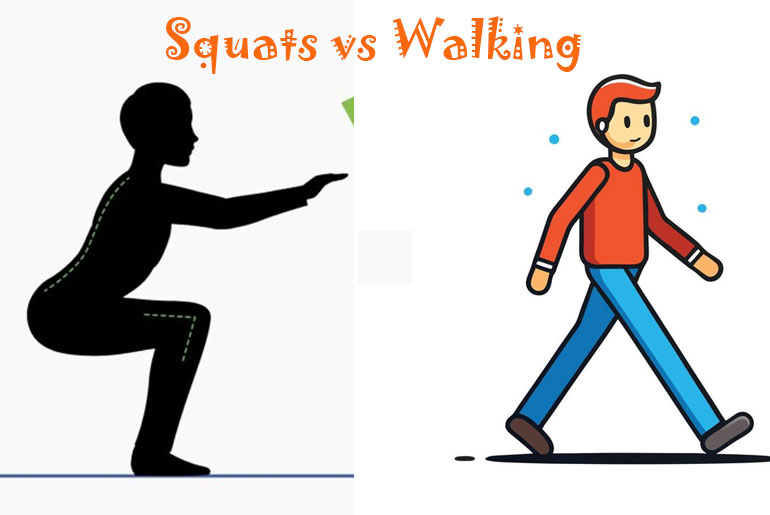
Walking and squats are two easy exercises that are frequently highlighted when it comes to enhancing fitness and preserving health. Although they have different functions in a fitness regimen, both types of exercise are quite effective. While squats are a strength-building exercise that works the main lower body muscles, walking is a natural, low-impact activity that promotes general health and endurance. People can choose the best exercise or mix both for greater fitness outcomes by knowing how each one operates.
Squats: What Are They?
Squats are a strength-training exercise that mainly works the lower body muscles, such as the calves, quadriceps, hamstrings, and glutes. In a squat, you lower your hips and bend your knees as though you were sitting in a chair, then stand back up.
Among the main advantages of squats are:

- Building muscle: Squats aid in the development of bigger, more powerful gluteal and leg muscles.
- Enhanced metabolism: Squats can boost metabolic rate and burn more calories because they work vast muscle groups.
- Increased functional strength: Squats replicate commonplace motions, including standing, sitting, and lifting objects.
- Joint support: Robust muscles surrounding the hips and knees can stabilise joints and lower the risk of damage.
- Bone health: Squats and other resistance exercises can increase bone density.
For people who wish to gain muscular growth and strength and enhance their athletic ability, squats are frequently advised.
Walking: What Is It?
One of the easiest and most natural ways to exercise is by walking. It is a low-impact cardio exercise that doesn’t require any particular equipment and can be done practically anyplace.
Among the main advantages of walking are:
- Cardiovascular health: Walking enhances blood flow and fortifies the heart.
- Fat burning: Walking quickly promotes weight management by burning calories.
- Enhanced endurance: Walking on a regular basis gradually increases endurance.
- Benefits to mental health: Walking can lower stress, elevate mood, and increase mental clarity.
- Joint-friendly activity: Walking is appropriate for individuals of all ages and fitness levels due to its mild impact.
Walking is a great way to maintain an active lifestyle, burn calories, and enhance general health without overtaxing the body.
Key Distinctions Between Walking and Squats
1. Exercise Type
- The main purpose of squats is strength training.
- Walking is mostly an aerobic (cardiovascular) workout.
2. Involved Muscles
- Squats intensely stress the lower-body muscles, notably the glutes and thighs.
- Walking is less strenuous than squats, but it still works the legs and core muscles.
3. Burning Calories
- Because of its intensity, squats burn more calories in a shorter amount of time.
- Over a longer period of time, walking gradually burns calories.
4. Fitness Objectives
- Squats are superior for toning, strength, and muscle growth.
- Walking is excellent for heart health, fat loss, and endurance.
5. Level of Impact
- If performed improperly, squats can put additional strain on joints, potentially leading to injuries that could hinder weight loss efforts.
- For novices or those healing from injuries, walking is safer and has less impact, making it a more suitable option for maintaining physical activity without risking further injury.
Which Is Better for Losing Weight?
Although they function differently, both activities can aid in weight loss.
- Squats aid in muscle growth, and increased muscular mass raises the body’s resting metabolism, which may result in increased daily caloric expenditure.
- Walking helps burn calories and gradually reduce body fat, especially if you walk briskly for 30 to 60 minutes.
Many fitness professionals advise mixing regular walking with strength exercises like squats for optimal results.
Who Should Opt for Squats?
Squats could be beneficial for those who:
- Desire to gain muscle and strength in your lower body
- Try to tone your glutes and legs.
- Are you searching for quick but powerful workouts?
- Want to boost athletic performance and power
Who Should Opt for Walking?
Walking might be more appropriate for those who:
- Are you new to working out?
- Prefer low-impact exercises
- Desire to increase endurance and heart health
- are concentrating on losing weight gradually.
- Do you need to engage in some stress-relieving exercise?
The Best Method: Combine Both
Combining walking and squats yields the greatest overall fitness advantages, as opposed to choosing one over the other.
For instance:
- Walking every day to burn calories and improve cardiovascular health
- Squat two to three times a week to tone and strengthen your muscles.
This well-rounded strategy promotes long-term weight control, heart health, muscle building, and endurance.
In conclusion, There is no clear winner in the squat vs. walk debate because each exercise has its own advantages. Walking is a great way to increase stamina and cardiovascular health, while squats are a great way to gain muscle and strength. They should be viewed as complementary exercises rather than as rivals. A well-rounded and long-lasting approach to health and fitness can be attained by incorporating both into a regular exercise regimen.
Disclaimer:
The information contained in this article is for educational and informational purposes only and is not intended as a health advice. We would ask you to consult a qualified professional or medical expert to gain additional knowledge before you choose to consume any product or perform any exercise.