

Our fitness regimens may be abandoned during the holiday season. You might be lodging somewhere else without a gym. Perhaps social sports are taking a vacation or your yoga studio is closed. Alternatively, you may simply be too busy attending social gatherings to find the time. Some folks will benefit greatly from taking a break from exerting themselves.
However, some will want the mental relief, while others will want to maintain the strength and fitness they’ve been working on all year.
Here are some time-saving, low-equipment ways to continue working out throughout the break.

Maintaining your fitness
Walking might be a simple and efficient low-impact strategy to continue reaping the health advantages of aerobic exercise if you want to stay in shape throughout the holiday season.
However, how far should you walk? Your chance of dying young from any cause decreases with the number of steps you walk each day.
The advantages level out for people 60 and older at 6,000–8,000 steps per day, and for those under 60, at 8,000–10,000 steps per day. So, these are worthwhile goals to pursue.
However, those who participate in sports or run frequently could be attempting to keep their cardiovascular fitness levels higher during the holidays.
Let’s say you have been incorporating high-intensity interval training, brisk walks, or running into your regimen. The duration and quantity of sessions can be shortened. To maintain your fitness, you must exercise as intensely as you usually do.
Snacks for cardiac exercise are another option. Usually lasting fewer than ten minutes, these are quick, intense workouts. However, it has been demonstrated that they improve cardio fitness.
Research indicates that even five minutes or fewer of high-intensity interval training, which consists of 30 seconds of hard effort followed by 30 seconds of relaxation, can increase cardiovascular fitness.
One minute of strenuous exercise had the same health advantages as four to nine minutes of moderate activity and up to 153 minutes of light exercise, according to another recent study.
Therefore, if you can exercise at a high intensity, even a small “snack” is worthwhile.
Remaining resilient
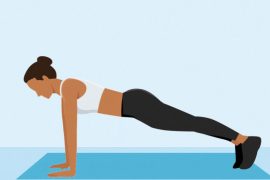
Similar to cardio snacks, short bursts of bodyweight training can serve as resistance exercise snacks for anyone looking to increase or maintain their muscle strength.
Instead of using exercise equipment, these workouts require you to use your body for resistance. They are therefore less intense, but you perform them more frequently.
One recommended strategy is to perform only one or two exercises per muscle group and one or two sets of each exercise. Do this five to seven times a week for up to 15 minutes at a time.
Below is an example workout, which you can perform as a circuit at home or in your neighborhood park. Make sure you warm up and cool down before and after your workout.
If you currently lift moderate to high loads at the gym and still have access to equipment, you might consider adopting a low-volume, high-load strategy.
This could mean that you just perform one set of workouts and one session every week, but you maintain the same amount of weight.
Keeping yourself healthy
Since exercise reduces stress and enhances mental health, many of us engage in it.
According to a 2025 study that compiled the data, people tend to report higher levels of well-being on days when they are more active and lower levels on days when they are more sedentary.
It can be challenging to fit exercise in during the holidays. But this period, which can mean more social events and fun as well as stress, tension, conflict—and for some people, loneliness—may be when you need it most.
Exercises like yoga, swimming, or 20 to 40 minutes of walking can help reduce stress, anxiety, and depression.
Reducing stress also requires exercising in a relaxing setting. Therefore, whether you are alone or with family and friends, try to find a peaceful place or walk outside in nature.
Another opportunity to connect is through exercise. According to research, being active together might make families with younger children feel more involved and connected.
For the break, think about family-friendly activities like biking, swimming at the beach or pool, walking paths with Christmas lights, or “exergaming” like Just Dance.
However, taking a break is OK
Regular physical activity is important for health and well-being. However, obsessing over fitness might lead to feelings of anxiety or withdrawal when considering cutting back on exercise during the holidays.
Don’t forget that taking a few weeks off can also be beneficial for you. It allows the body and mind to have a break and recover both physically and mentally from a regular or strict exercise regime.
Sleep and downtime are vital for recovery. But you’re more likely to ignore these when you’re busy, like when you’re juggling deadlines and social events before the holidays. And you’re more likely to be stressed and tired, too.
Allowing yourself to reduce your exercise commitments, prioritize self-care, and allow more time to rest might be just what you need.
Disclaimer:
The information contained in this article is for educational and informational purposes only and is not intended as a health advice. We would ask you to consult a qualified professional or medical expert to gain additional knowledge before you choose to consume any product or perform any exercise.