
Although your joints are meant to sustain you throughout your life, some workouts can put too much strain on them, particularly if they are done improperly or lack the necessary strength and mobility. Experts in fitness frequently advise against a few risky exercises that could do more harm than good. To help you safeguard your long-term joint health and select safer, more effective options, here is a thorough examination of five workouts that are frequently discouraged.
1. Activities That Affect Digestion
Immediately after eating, some people engage in deep compression exercises, vigorous twisting motions, or severe core workouts. Because they directly press against the abdominal organs, this can make digestion more difficult. Exercises that include bending sharply at the waist, heavy crunches, or stomach vacuums immediately after meals can all slow down gastric emptying and cause pain, bloating, or acid reflux. Although core exercise is crucial, experts stress that it should never be performed immediately after eating because the action puts undue strain on the lower back joints and digestive tract. Waiting at least 60 to 90 minutes after eating ensures better digestion and prevents unnecessary joint compression.
2. Shoulder presses or lat pulldowns behind the neck
When performing pulldowns or presses behind the neck, the shoulders are externally rotated, which is not natural. The rotator cuff, neck, and upper spine are under more stress because of this acute angle. The majority of people don’t have the shoulder mobility needed to carry out this exercise safely. The activity may eventually result in cervical spine compression, shoulder impingement, and ligament damage. To increase shoulder and back strength without sacrificing joint integrity, fitness instructors advise adhering to overhead presses or front pulldowns in a natural range of motion.

3. Powerful Leaping Motions
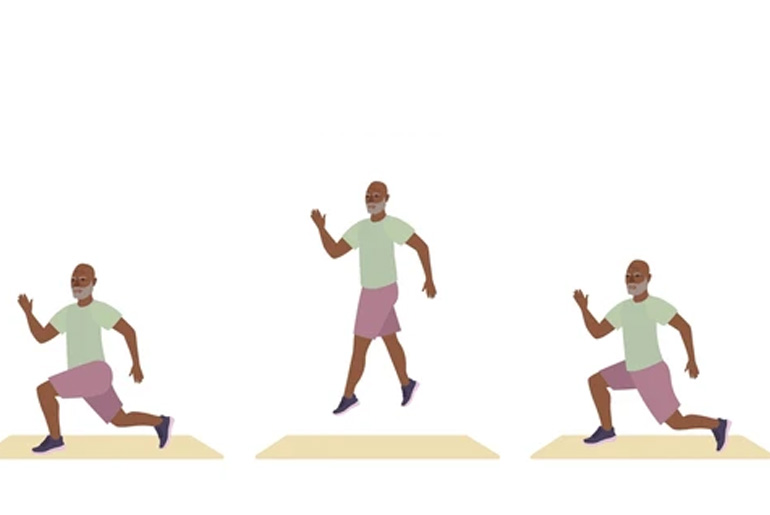
Even though jumping is a fantastic way to burn calories, doing high-impact leaps repeatedly, such as box jumps, depth jumps, or hard-landing plyos, can cause damage to your knees, hips, and ankles. Tendonitis, sprains, and cartilage injury are more likely to occur in people with poor landing mechanics, weak stabilizing muscles, or stiff joints. For many, the risk is greater than the reward, particularly for novices or those with joint problems. Step-ups, controlled bounds, and trampoline-based activities are low-impact substitutes that provide comparable conditioning but with significantly less joint stress.
4. Traditional Pull-Ups (For Certain People)
Although pull-ups are an effective upper-body workout, those who have trouble with shoulder mobility or scapular control may find them difficult to perform. The exercise overstresses the shoulders and elbows when done incorrectly, such as by arching the spine, flaring the elbows, or employing momentum. The consequence can eventually result in wrist pain, rotator cuff overuse, and tendon inflammation. To increase strength without aggravating joints, experts advise starting with scapular pull-ups, assisted pull-ups, or neutral-grip versions.
5. Strong Deadlifts
The deadlift is a great full-body strength workout, but it can be dangerous if done wrong. Heavy deadlifts can put tremendous force on the lumbar spine. The risk of disc herniation, lower back strain, and joint compression is greatly increased by poor technique, restricted hip mobility, or a weak core. Many trainers recommend safer alternatives, like Romanian deadlifts, trap-bar deadlifts, and kettlebell deadlifts, for novices and even intermediate lifters. These substitutes lessen joint and spinal strain while efficiently increasing strength.
In conclusion
Because joint damage is difficult to repair, protecting your joints should always be your first priority. While some people find success with workouts like jumps, pull-ups, heavy deadlifts, and behind-the-neck pulldowns, they sometimes entail significant hazards, particularly when done without the right strength, mobility, or supervision. Your joints may genuinely last a lifetime if you choose safer versions and pay attention to your body. This will keep you strong, active, and injury-free.
Disclaimer:
The information contained in this article is for educational and informational purposes only and is not intended as a health advice. We would ask you to consult a qualified professional or medical expert to gain additional knowledge before you choose to consume any product or perform any exercise.