
One of the easiest and most effective bodyweight workouts you can perform anywhere without any equipment is the push-up. Regardless of your level of experience, performing push-ups on a daily basis can greatly enhance your general health, strength, and endurance. However, the crucial question is: how many push-ups are sufficient?
The Reasons Push-Ups Work So Well
As a complex bodyweight exercise, push-ups work multiple muscles at once. In addition to working the core, lower back, and even the legs for stability, they mainly target the chest, shoulders, and triceps. Push-ups are a very effective way to develop functional strength because they include the entire body. They also enhance physical endurance, balance, and coordination. Push-ups are appropriate for all fitness levels because they are simple to modify, such as incline push-ups for beginners or more difficult varieties like decline push-ups.
What is the recommended number of push-ups?
Your level of fitness determines the optimal number:

First-timers
- Start each set with five to ten push-ups.
- Aim for two to three sets per day.
- Pay more attention to proper form than quantity.
Intermediate
- Try to do 15–25 push-ups each set.
- Finish three to four sets
- 50–100 push-ups a day in total
Innovative
- Try to do 25–50 push-ups each set.
- Do four to five sets.
- Daily total: 100–200+ push-ups
Basic rule: You’re on the correct track if you can finish your repetitions without sacrificing form. Quantity is never as good as quality.
Daily Push-Ups’ Health Benefits
1. Increases Strength in the Upper Body: Push-ups strengthen your arms, shoulders, and chest, making daily duties easier.
2. Enhances Core Stability: When performing push-ups, maintaining good posture works your core, which enhances balance and lowers your chance of injury.
3. Improves Heart Health: Over time, doing push-ups at a steady speed can enhance heart health by raising your heart rate.
4. Promotes Joint and Bone Health: Push-ups and other weight-bearing activities support the maintenance of joint strength and bone density.
5. Helps with Weight Control: Push-ups increase metabolism and aid in fat loss by burning calories and gaining muscle.
6. Improves Posture: For those who work at desks, having strong upper body muscles is very helpful in correcting slouching.
Advice to Optimise Outcomes
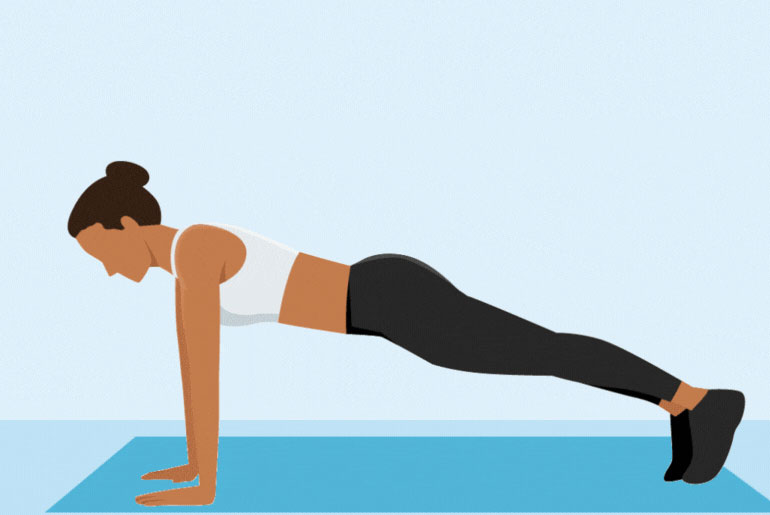
Maintaining good form is crucial for getting the most out of push-ups. Maintain a straight body from head to heels, engage your core, and refrain from sagging or raising your hips. Instead of hurrying your development, gradually increase the number of repetitions as your strength increases. Over time, even a little daily workout might provide results, so consistency is essential.
To target multiple muscle groups and avoid plateaus, incorporate variants such as wide-grip, diamond, or decline push-ups. It’s also important to allow adequate rest when needed, as muscles recover and grow during recovery periods. Combining push-ups with other exercises such as squats, planks, or cardio can further enhance overall fitness.
In conclusion, There is no universal number of push-ups that suits everyone, but for most people, aiming for 50–100 push-ups per day is a practical and effective target. The real key lies in consistency, proper form, and gradual improvement. Even a few minutes of daily push-ups can lead to stronger muscles, better endurance, improved posture, and overall health. Start at your own level, stay committed, and over time, the benefits will become clearly visible.
Disclaimer:
The information contained in this article is for educational and informational purposes only and is not intended as a health advice. We would ask you to consult a qualified professional or medical expert to gain additional knowledge before you choose to consume any product or perform any exercise.