

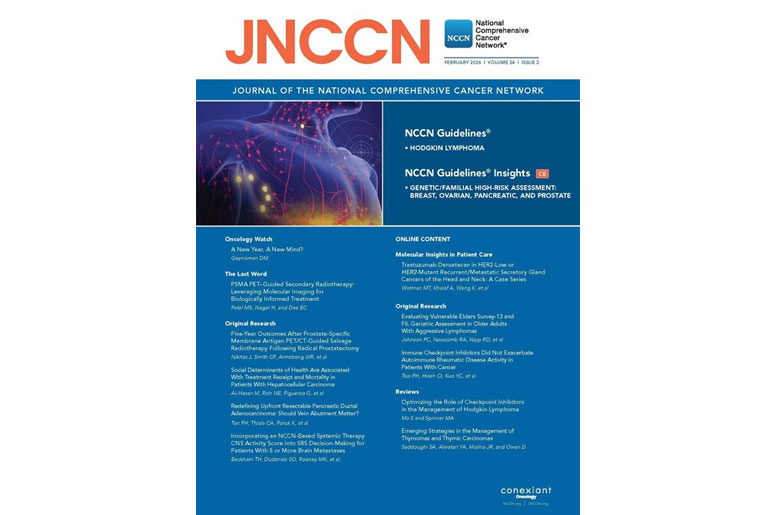
A Prostate-specific membrane antigen (PSMA) PET/CT scan can help predict how long patients will live without their cancer getting worse and assist in planning their treatment if their PSA levels are rising after prostate surgery, based on new research published in the February 2026 issue of JNCCN—Journal of the National Comprehensive Cancer Network.
Retrospective clinical data from 113 prostate cancer patients treated at the Jonsson Comprehensive Cancer Center at the University of California, Los Angeles (UCLA), was used by the researchers. PSMA PET/CT scans were used to stage each for recurrent illness.
In contrast to prostate bed radiation alone, whole-pelvis radiotherapy (WPRT) did not significantly improve PFS, and individuals with no discernible illness on the scans (T0N0M0) had the best PFS, according to exploratory analysis. WPRT did, however, considerably increase PFS for patients with obvious, localized illness (TrN0M0). PFS was considerably enhanced by androgen deprivation therapy (ADT) for patients with distant or nodal metastatic disease that was apparent on the scans. PSMA PET/CT scans could therefore aid in more effectively customizing treatment for recurrence in this patient group.

“This research highlights the importance of facilitating routine PSMA PET/CT scans in patients with a biochemical recurrence of prostate cancer after surgery to remove the prostate gland,” stated Lead Researcher John Nikitas, MD, UCLA Jonsson Comprehensive Cancer Center. “The information from these scans is strongly associated with long-term outcomes and frequently changes treatment recommendations. We found that other measures, like PSA levels, were not strongly associated with long-term response to secondary/salvage therapy.”
The researchers pointed out that by avoiding any treatments that are less likely to be successful, they may be able to customize therapy using PET/CT scans to improve outcomes and lessen adverse effects.
“PSMA PET imaging lets us move from one-size-fits-all radiation therapy in the secondary/salvage setting to treatment that’s guided by the anatomy and, perhaps by extension, the actual biology of a patient’s prostate cancer,” commented E. Christopher Dee, MD, Memorial Sloan Kettering Cancer Center, who was not involved in this research. “This study shows that seeing where the cancer is, even at low PSA levels, may meaningfully shape treatment decisions and could potentially influence long-term outcomes. It’s a step forward in making prostate cancer care more precise and effective and can inform future prospective research in the secondary/salvage radiation space.”
The February 2026 issue of JNCCN also includes a longer discussion of the findings, written by Dr. Dee. “Five-Year Outcomes After Prostate-Specific Membrane Antigen PET/CT-Guided Salvage Radiotherapy Following Radical Prostatectomy” and its accompanying commentary, “The Last Word,” can be read in their entirety.
Disclaimer:
The information contained in this article is for educational and informational purposes only and is not intended as a health advice. We would ask you to consult a qualified professional or medical expert to gain additional knowledge before you choose to consume any product or perform any exercise.