
Pilates is renowned for its gentle yet efficient method of increasing balance, strength, and flexibility. It has developed into a popular workout throughout time for those who wish to achieve benefits without overtaxing their joints. The Pilates ball is one easy-to-use piece of equipment that elevates Pilates. This ball, which is compact, light, and simple to handle, adds controlled instability to your training. It works so well because of that little wobbling. Instead of making your body work harder, it makes it work smarter.
For deep core muscles that are sometimes underutilized in standard floor exercises, Pilates ball activities are very helpful. Regardless of your goals—better posture, a stronger core, or greater spine health—Pilates ball exercises easily fit into most workout regimens.
Why do Pilates ball movements help strengthen the core?

Instability is the main advantage of Pilates ball workouts. Your muscles must constantly make little modifications to maintain balance while your body is on an unsteady surface. According to Nagpaul, this procedure engages deep core muscles such as the transverse abdominis, which serves as your spine’s natural support belt. Pilates ball exercises strengthen your core to support daily activities like walking, bending, and lifting, in contrast to regular crunches, which only work your surface muscles.
When compared to stable floor workouts, instability-based core exercises greatly enhance muscle activation and balance. Pilates ball exercise is particularly beneficial for functional strength because of this.
Pilates ball exercises’ advantages for the health of your back and spine
The back and spine benefit greatly from Pilates ball workouts. Exercises like ball bridges and back extensions strengthen the muscles that support the spine and promote good alignment. The results might improve soreness and lessen stiffness brought on by extended sitting or bad posture.
Frequent exercise lessens the tension on the lower back by strengthening the support system surrounding the spine. Additionally, controlled movements increase spinal mobility, which is critical for preventing injuries and maintaining long-term back health.
In what ways do Pilates ball exercises enhance balance and posture?
Weak back and core muscles are frequently the cause of poor posture. The problem is addressed with Pilates ball movements, which teach your body to maintain alignment even when your balance is impaired. Your shoulders will automatically pull back and your spine will remain more upright as your core strength increases.
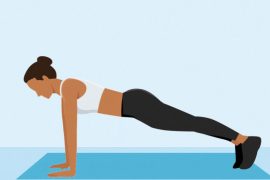
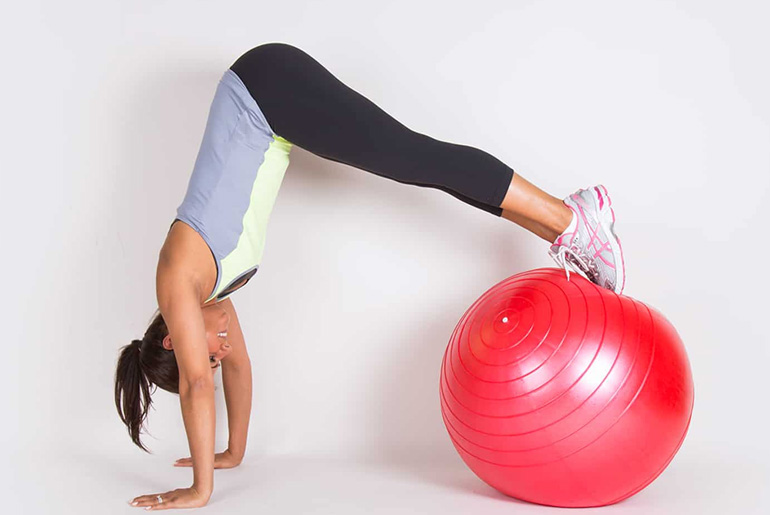
Exercises like planks with feet on the ball and Russian twists enhance coordination and body awareness. Over time, this results in improved posture not only when exercising but also when sitting, standing, and walking during the day.
Pilates ball movements that are easy for beginners to try
Start off slowly and concentrate on breathing and control if you’re new to Pilates ball exercises. These simple workouts for beginners help you engage your core without overtaxing your body. For each exercise, Nagpaul suggests 8–12 repetitions with steady, regulated breathing.
1. Ball bridge: Place your feet on the ball while lying on your back. Squeeze your glutes as you raise your hips, engaging your core throughout the movement. Slowly descend.
2. Inner thigh squeeze: Put the ball between your knees while lying on your back. Squeeze the ball gently, hold it for a short while, and then let go.
3. Bird-dog with ball: Hold the ball in one hand while on all fours. Maintaining a firm core, extend the opposing arm and leg.
4. Ball sit-ups: Rest your lower back on the ball while sitting on it and moving your feet forward. Slowly curl up, then control your way back.
5. Ball roll-out: Place your hands on the ball while kneeling. Pull it back in after rolling it forward a little and using your abs.
Who should exercise with caution when using a Pilates ball?
Even while Pilates ball exercises are generally safe, not everyone can benefit from them. Before beginning, people in advanced stages of pregnancy, those with severe spinal ailments, those with recent injuries, and those with balance issues should speak with a healthcare provider. If exercises are performed improperly, the ball’s instability may raise the danger of strain.
Disclaimer:
The information contained in this article is for educational and informational purposes only and is not intended as a health advice. We would ask you to consult a qualified professional or medical expert to gain additional knowledge before you choose to consume any product or perform any exercise.