
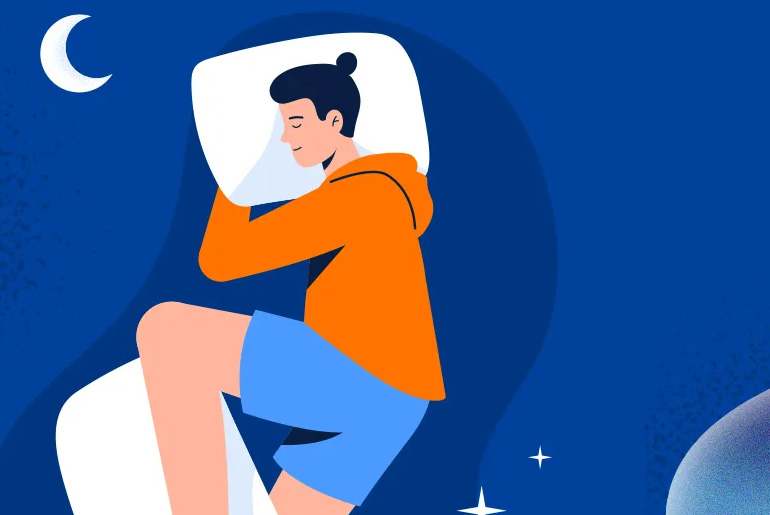
To make time for everything you couldn’t fit into the day earlier, people frequently put off going to sleep. The only time left for leisure after long, busy workdays is at night, when people may chat, catch up on shows, and make long-overdue phone calls. Before you know it, though, you’re hankering after more—an additional episode, an additional hour of scrolling, an additional excuse to stay up.
Your health will suffer greatly as a result of this compromise. One of the most important foundations of good health is sleep. Cutting corners has an impact on your major organs, including the heart and brain, and doesn’t only make you feel sleepy in the morning.
Elevated cognitive deterioration
The brain’s “functional waste disposal system,” or glymphatic system, comes into action during deep sleep. Proteins like beta-amyloid, which may be a sign of Alzheimer’s disease risk, are eliminated via the lymphatic system. Future memory issues may be exacerbated by the brain’s inability to finish its waste disposal function when we have inadequate or interrupted sleep, the neurologist explained. It draws attention to how the brain performs a silent housekeeping function by eliminating toxins that can build up and increase the risk of neurodegenerative illnesses like Alzheimer’s. Skipping sleep interferes with this process.
Insufficient sleep impairs memory. Processing and memory of information deteriorate. In addition, the neurologist stated that “overworked neurons cannot effectively organize information without rest, and we lose access to previously learned knowledge, thereby contributing to the risk of memory loss and potentially accelerating cognitive decline as we age.”
Older individuals are not the only ones who are concerned about cognitive deterioration. Lack of sleep can cause cognitive issues much earlier. “Middle-aged people are also affected; it’s not just older adults,” Dr. continued. Sleep deprivation in your 40s and 50s can set the stage for dementia decades later.
Pressure on the heart
Sleep also has a negative impact on heart health. In essence, sleep allows your body to recuperate. However, your body becomes overloaded and puts strain on your heart when you don’t get enough sleep.
Good sleep is crucial for preserving the cardiometabolic balance, according to Dr. Praveen Kulkarni, director of intervention cardiology at Nanavati Max Super Speciality Hospital in Mumbai. Sleep deprivation throws off the delicate balance between the heart, hormones, and metabolism.
Sleep is crucial for preserving the equilibrium of the cardiometabolic system. Rest, organ repair, and revitalization must be guaranteed, according to Dr. Regularly neglecting to get C throws your internal system out of balance. You experience chronic sleep deprivation over time, which changes your hormones.
Chronic sleep deprivation raises the hunger hormone ghrelin and lowers the satiety hormone leptin, which ultimately leads to weight gain, a high body mass index, and hypertension. Sleep-deprived people have higher levels of the stress hormone “cortisol,” which raises blood sugar, causes chronic inflammation, and increases the risk of plaque accumulation and hypertension,” he noted. Heart attacks are eventually caused by plaque accumulation.
Therefore, your heart has to work considerably harder than it should when under constant stress for extended periods of time. Lack of sleep keeps the body in a stressed-out state. The cardiologist added that “the imbalance in the sympathetic tone contributes to high heart rate, blood pressure, and arrhythmia” since sleep deprivation upsets the hormone balance.
For adequate rest and recuperation, Dr. strongly advised obtaining at least 7 to 8 hours of sleep.
Disclaimer:
The information contained in this article is for educational and informational purposes only and is not intended as a health advice. We would ask you to consult a qualified professional or medical expert to gain additional knowledge before you choose to consume any product or perform any exercise.