

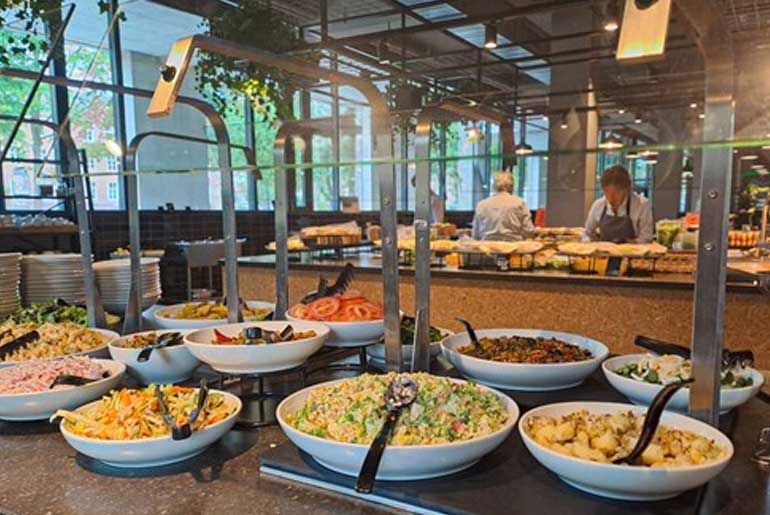
Breda University of Applied Sciences (BUas) makes an announcement on World Food Day that they would be taking part in a three-year food research project. In collaboration with the Louis Bolk Institute, Wageningen University & Research (WUR), and numerous other partners, BUas will investigate how we might improve the way we eat in work settings. Businesses will try ways to further encourage hospital employees and outside guests to choose more sustainably produced and healthier food options in hospital company canteens.
The FUEL study has social relevance because obesity and chronic disease rates are on the rise in many nations, and the climate issue necessitates more sustainable food production and consumption. “Company restaurants and hospital catering outlets reach millions of people every day, but they are not making the most of their opportunity to encourage healthy and sustainable choices,” explains BUas senior lecturer and researcher Michel Altan. “By changing this, we can make a significant impact on both health and sustainability. There is still a stigma that healthy food is not tasty, and as a result, the food offered by caterers is often less healthy than it could be.”
BUas will take part in this cutting-edge study and create evidence-based tactics that go beyond conventional awareness efforts. To provide successful solutions, this global educational institution integrates knowledge from organizational psychology, nutrition science, and behavioral science. Strategic menu changes, astute communication, and nudging strategies that facilitate healthy choices are the three main foundations of the research.

“What makes this project unique is that we will not only look at the caterer and behavior in the restaurant, but also investigate whether people continue to make these healthier choices at home,” states Altan. “We will measure effects that are essential for sustainable behavioral change.”
The BUas strategy places a strong emphasis on the employees of company restaurants because their acceptance of healthy food options determines how effective they are. A growing number of organizations understand the importance of choosing sustainable and healthful foods. Prior studies have demonstrated that the involvement and contribution of employees to food production or supply is even more significant: their opportunities, abilities, and motivation play a critical influence in motivating guests to choose sustainable and healthful food options. Therefore, the University of Applied Sciences will create tangible resources and training programs that equip kitchen and service personnel with the information, abilities, and encouraging work environment they need to fulfill their role as “change agents.”
It is symbolic that the project will be announced on World Food Day. Every year, this annual UN day raises awareness of proper nutrition and food security around the world.
Disclaimer:
The information contained in this article is for educational and informational purposes only and is not intended as a health advice. We would ask you to consult a qualified professional or medical expert to gain additional knowledge before you choose to consume any product or perform any exercise.