

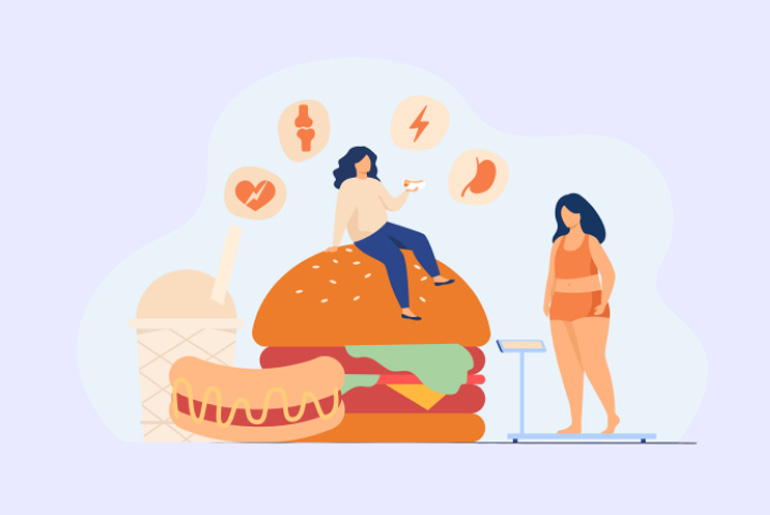
Regular overeating can harm the body, while occasional heavy meals are normal. Overeating can result in sluggishness, bloating, and discomfort and is frequently motivated by stress, emotions, or boredom rather than hunger. In addition to raising the risk of insulin resistance, liver problems, and heart disease, it can eventually interfere with normal hunger signals. Being aware of the body’s requirements and achieving equilibrium requires knowing the difference between emotional triggers and actual hunger. Simple, everyday routines can be incorporated to enhance long-term health and interrupt this cycle. Here are five useful methods for successfully reducing overeating.
Take a Moment to Assess Your Level of Hunger
To differentiate between emotional or habitual nibbling and genuine hunger, simply pause before eating. Inspired by Okinawa, Japan, where residents practice “Hara Hachi Bu,” or eating only until 80% satisfied, this approach places more emphasis on mindfulness and moderation than on restriction. The pain that typically follows overeating can be avoided by taking just 30 seconds to gauge your level of hunger before reaching for food.
Before you snack, drink some water
Water consumption prior to meals helps reduce needless snacking. Because hydration before meals makes you feel full, an NIH study indicated that adults who drank 500 mL of water before meals ate fewer calories. The body frequently mistakes thirst for hunger. Drinking enough water promotes energy, digestion, metabolism, and hunger control. When cravings strike again, try drinking a glass of water first to determine whether you really need the snack.
Utilize little bowls and plates
How much you eat depends largely on the size of your meals. According to NIH research, utilizing smaller bowls and plates can assist in avoiding overeating because people often serve and eat more food on larger plates without noticing it. Smaller meals can “trick” the brain into thinking that less is sufficient, which makes portion control simple and efficient.
Reduce Stress and Improve Sleep
Stress is more frequently associated with overeating than with a lack of self-control. “Stress eating” is caused by elevated cortisol, the stress hormone, which heightens appetite. Additionally, lack of sleep increases cortisol, which intensifies needless food desires. Stress-induced overeating can be prevented by implementing a regular sleep schedule and stress-relieving practices like deep breathing, exercise, or meditation.
Make unhealthy snacks more difficult to get to
Impulsive eating can be decreased by putting up barriers against harmful snacks, such as hiding them or swapping them out for healthier options. Making these items less available promotes thoughtful decision-making and helps break the temptation to reach for high-calorie snacks when under stress or in a hurry.
Easy Routines Can Avoid Uncomfortable Situations
By adopting these easy practices, mindful eating is encouraged to be consistent, and the discomfort that comes with overeating is avoided. They promote long-term health and balanced eating habits by favoring well-being over impulsive consumption.
Disclaimer:
The information contained in this article is for educational and informational purposes only and is not intended as a health advice. We would ask you to consult a qualified professional or medical expert to gain additional knowledge before you choose to consume any product or perform any exercise.